

Turnkey PCB assembly is a comprehensive solution in electronics manufacturing that covers the entire process from start to finish. Unlike traditional assembly methods, where customers source components and manage logistics separately, turnkey PCB assembly providers handle everything — from component procurement and PCB fabrication to assembly, testing, and final delivery. This approach simplifies the production cycle, reduces errors, and ensures that the end product meets both design and quality expectations.
In a turnkey setup, the customer only needs to provide design files such as Gerber data, a Bill of Materials (BOM), and assembly drawings. Once received, the manufacturer takes full responsibility for component sourcing, production scheduling, and quality assurance, allowing clients to focus on product design and innovation instead of supply chain management.
Advantages of Turnkey PCB Assembly
Faster Time-to-Market
One of the most significant benefits of turnkey PCB assembly is speed. By centralising all processes under one roof, manufacturers can complete projects more quickly and efficiently. Since the provider manages component sourcing and logistics, delays due to multiple vendor coordination are minimised, enabling faster product launches.
Cost Efficiency
Turnkey PCB assembly is cost-effective because it reduces administrative overhead and prevents unnecessary markups from multiple intermediaries. Reputable manufacturers also maintain strong relationships with component distributors, giving them access to competitive pricing and genuine parts. The streamlined process eliminates costly mistakes that often occur when managing multiple vendors.
Improved Quality and Reliability
When the same provider oversees every stage of production, quality control becomes more consistent and effective. Each step — from soldering and assembly to inspection and testing — follows stringent standards. Automated optical inspection (AOI), X-ray testing, and functional tests are commonly performed to ensure the PCBs meet design specifications and industry standards.
Simplified Project Management
Dealing with multiple suppliers can be time-consuming and complex, especially for businesses with tight deadlines. Turnkey PCB assembly eliminates this issue by providing a single point of contact for the entire process. Clients can easily monitor progress, communicate design changes, and receive project updates directly from the manufacturer.
The Process of Turnkey PCB Assembly
- Design File Submission
The process begins when the client submits design files, including Gerber data, BOM, and assembly drawings. These documents are essential for accurate fabrication and assembly planning.
- Component Procurement
Once the design is approved, the manufacturer sources components from trusted suppliers. They verify availability, lead times, and part authenticity, ensuring all materials meet the client’s requirements and comply with RoHS or other relevant standards.
- PCB Fabrication
Next, the manufacturer fabricates the bare PCB according to the design specifications. Layer stack-up, copper thickness, hole sizes, and solder mask colour are carefully considered to match the intended performance and aesthetic.
- Assembly and Soldering
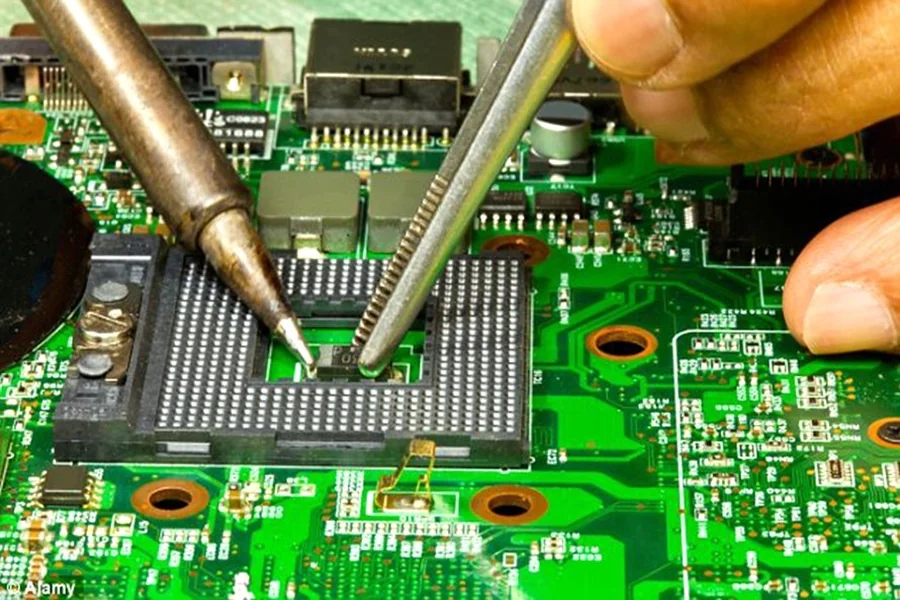
In this stage, surface mount (SMT) and through-hole components are placed and soldered onto the PCB. Modern turnkey facilities use advanced automated pick-and-place machines, reflow ovens, and wave soldering systems to guarantee precision and consistency.
- Inspection and Testing
After assembly, the boards undergo rigorous testing and inspection. AOI, X-ray inspection, and functional testing detect any faults or irregularities. This step ensures every PCB is fully operational before shipping.
- Packaging and Delivery
Once testing is complete, the finished PCBs are packaged securely and delivered to the client. Some turnkey providers also offer conformal coating, enclosure integration, and cable harnessing as part of their post-assembly services.
Why Choose Turnkey PCB Assembly?
Turnkey PCB assembly is ideal for startups, engineers, and companies looking to minimise risk and maximise efficiency. It is particularly useful for:
- Prototyping: Faster iterations with lower setup complexity.
- Small and Medium Production Runs: Seamless scaling from prototype to mass production.
- Complex PCB Designs: Simplified management for multi-layer or high-density boards.
- Businesses with Limited In-House Resources: No need to maintain separate sourcing, fabrication, and assembly teams.
By integrating all steps under one expert provider, businesses can enjoy smoother workflows, higher yield rates, and fewer delays.
The Future of Turnkey PCB Assembly
With the rise of IoT devices, wearable electronics, and smart appliances, the demand for quick and reliable PCB assembly solutions continues to grow. Turnkey PCB assembly is evolving with advanced automation, AI-driven quality control, and improved supply chain transparency. These innovations ensure consistent quality even for complex, multi-layer designs, while reducing human error and turnaround time.
Furthermore, the increasing global emphasis on sustainability is driving turnkey providers to adopt eco-friendly materials and processes. Lead-free soldering, recyclable packaging, and energy-efficient production are now common practices in modern PCB facilities.
Partnering with the Right Turnkey PCB Assembly Provider
Selecting the right manufacturing partner is crucial for the success of your electronic product. An experienced provider will not only deliver high-quality boards but also assist with design optimisation, cost reduction, and reliability improvements. Always ensure that your supplier has the technical expertise, certifications (such as ISO and IPC), and testing capabilities necessary to meet your industry’s standards.
If you’re searching for reliable printed circuit board assembly suppliers that can handle your project from start to finish, partnering with an experienced turnkey provider ensures your designs are built to the highest standards of quality, precision, and performance.
